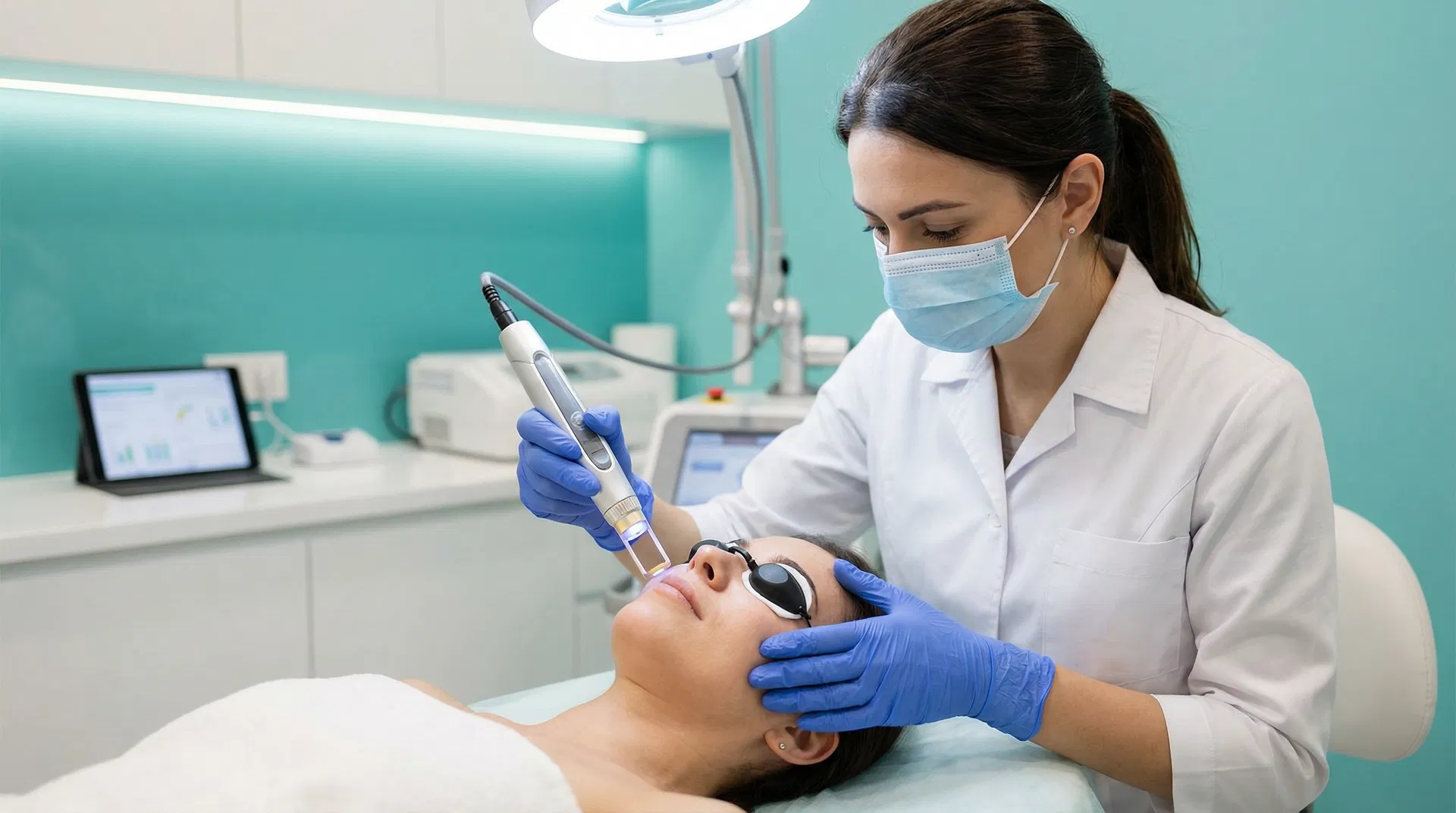
The Pico Laser Revolution: Why Picosecond Technology Changes Everything
Pico Laser technology represents a paradigm shift in aesthetic medicine, delivering results previously impossible with nanosecond lasers. Understanding this revolutionary technology helps explain why dermatologists increasingly recommend Pico Laser for pigmentation concerns and other applications.
Understanding Picosecond Technology
Traditional lasers operate on a nanosecond scale (billionths of a second). Pico Lasers operate on a picosecond scale (trillionths of a second), delivering energy 1,000 times faster than nanosecond lasers. This dramatically faster pulse duration creates a photoacoustic effect that shatters pigment particles into smaller fragments that the body can eliminate more effectively.
The faster pulse duration also generates less heat, reducing thermal damage to surrounding tissue. This combination of superior efficacy and reduced thermal damage makes Pico Laser ideal for treating pigmentation concerns in all skin types, including darker skin tones where thermal damage is particularly problematic.
Superior Pigmentation Treatment
Pico Laser achieves 90% or greater clearance of melasma, age spots, and other pigmentation concerns. The photoacoustic effect shatters pigment particles into fragments so small that the body's lymphatic system can eliminate them naturally. Multiple sessions (typically 4-6) spaced 4-6 weeks apart deliver progressive improvement.
For post-inflammatory hyperpigmentation, Pico Laser is particularly effective. The technology targets melanin without damaging surrounding tissue, making it ideal for treating dark marks left after acne or other skin trauma, especially in darker skin types.
Pico Laser also effectively treats tattoos, including stubborn colors previously resistant to treatment. The photoacoustic effect breaks down tattoo ink particles more effectively than nanosecond lasers, often requiring fewer sessions for complete removal.
Minimal Downtime Advantage
Unlike traditional resurfacing lasers requiring 5-7 days of downtime, Pico Laser typically causes only 1-2 days of mild redness. Most patients can return to work immediately or within one day. This minimal downtime makes Pico Laser ideal for busy professionals and those seeking results without significant disruption.
The reduced thermal damage also means fewer side effects. Patients experience minimal swelling, peeling, or discomfort compared to other laser treatments. This makes Pico Laser particularly suitable for patients with sensitive skin or those concerned about downtime.
Ideal for Malaysian Skin
Pico Laser is particularly well-suited for treating Asian skin, which is prone to melasma and post-inflammatory hyperpigmentation. The technology's ability to target pigment without thermal damage makes it safer for darker skin tones than many competing technologies. This makes Pico Laser an excellent choice for Malaysian patients seeking pigmentation treatment.
The minimal downtime also appeals to Malaysian patients who prefer results without extended recovery periods. The combination of effectiveness and convenience makes Pico Laser increasingly popular in Malaysia.
Treatment Protocol
Most Pico Laser treatments take 15-30 minutes depending on treatment area size. Sessions are spaced 4-6 weeks apart to allow the body time to eliminate fragmented pigment. Most patients require 4-6 sessions for optimal results, though some concerns improve faster.
Post-treatment, patients may experience mild redness lasting a few hours to 1-2 days. Some patients experience light crusting or peeling, but this is typically minimal. Makeup can be applied immediately after treatment.
Cost Considerations
Pico Laser treatment costs RM 599 to RM 899 per session depending on treatment area size. A typical treatment course for melasma costs RM 2,400 to RM 5,400 for 4-6 sessions. While this represents a significant investment, the superior results and minimal downtime often justify the cost.
Why Pico Laser is Revolutionary
Pico Laser technology delivers superior results for pigmentation concerns compared to older nanosecond technology. The photoacoustic effect shatters pigment more effectively. The minimal thermal damage makes it safer for all skin types. The minimal downtime fits modern lifestyles. The versatility addresses multiple concerns effectively.
Most importantly, Pico Laser delivers visible results that patients appreciate. The combination of effectiveness, safety, and convenience makes it a revolutionary advancement in aesthetic medicine.
If you're struggling with melasma, age spots, or other pigmentation concerns, Pico Laser may be the solution you've been seeking.
Frequently Asked Questions
Q: How many Pico Laser sessions will I need? Most patients with melasma or post-inflammatory hyperpigmentation require four to six sessions spaced four to six weeks apart. Superficial sun spots may clear in two to three sessions, while deeper pigmentation may require additional treatments.
Q: Is Pico Laser safe for darker Malaysian skin tones? Yes. Pico Laser's photoacoustic mechanism minimises thermal energy, making it significantly safer for Fitzpatrick skin types IV–VI compared to older nanosecond lasers. Your doctor will calibrate settings specifically for your skin tone.
Q: What is the downtime after a Pico Laser session? Most patients experience mild redness for one to two days. Light crusting or peeling may occur but is minimal. The majority of patients can return to work the following day and apply makeup immediately after treatment.
Experience Pico Laser at Medicyto Clinic
Medicyto Clinic offers doctor-administered Pico Laser at our Kota Damansara and Bukit Mertajam branches. Our physicians assess your pigmentation type and customise treatment parameters for your skin. Contact us via WhatsApp to book a free consultation and discover whether Pico Laser is the right solution for your skin concerns.